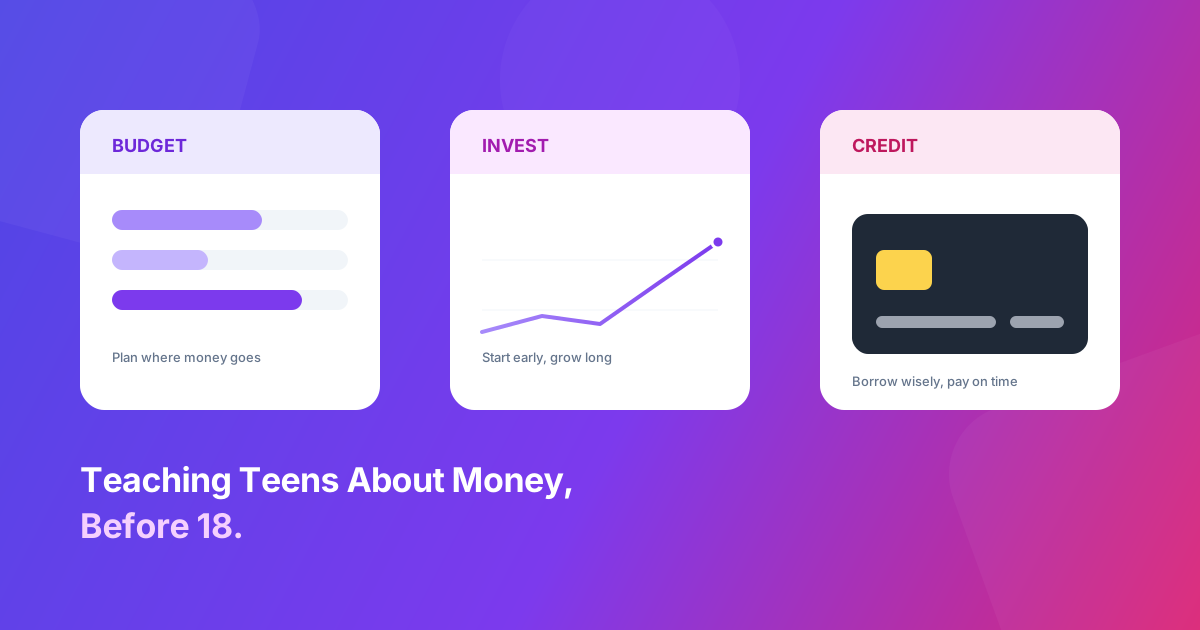
The teen years are a strange and valuable window. A teenager is old enough to handle real money and make real decisions, but young enough that the mistakes are still small and cheap. That makes it the last great low-stakes classroom before adulthood arrives with rent, paychecks, and credit cards. Getting teaching teens about money right in these years pays off for decades.
MoneyHelper, the UK government-backed guidance service, captures the core principle: by the teen years, children can take more responsibility for managing their money, and the best way for them to learn is to handle it themselves. When they manage their own budget, MoneyHelper notes, they quickly learn that money runs out and needs to be spent carefully. Here is the practical roadmap.
Skill 1: Run a Real Budget
A teen's budget is no longer three jars. It is their actual spending life: snacks, outings, gas, subscriptions, gifts. The leap from a kid's allowance to a teen's budget is the leap from theory to reality.
Give them a defined amount, whether allowance, earnings, or both, and let them manage it for real. When they overspend in week two and have nothing for week four, do not rescue them. That empty-wallet feeling is the lesson, and it is far cheaper to learn at 15 than at 25. If they have not built the basics yet, our guide on how to teach kids to budget sets the foundation.
Skill 2: Save With a Purpose
Teens save best when the goal is theirs and it matters to them: a phone, a car, a trip, college spending money. The CFPB lists understanding long-term savings and spending and saving based on her own goals and values among its key teen money milestones.
Help them set a concrete target and a timeline, then let them watch progress build. A teen who saves up for something big and finally buys it learns delayed gratification in the most convincing way possible: by living it.
Skill 3: Understand Saving vs Investing
By the teen years, kids are ready for the real distinction between keeping money safe and putting it to work. This is the moment to teach that money they will not need for years can be invested to grow, while money for soon stays safe. Our guide to saving vs investing lays it out, and it lands far better with a teenager who can grasp risk and time horizons.
Skill 4: Learn How Investing Actually Works
Teens have the single greatest advantage in all of investing: time. Money invested at 16 has half a century to grow before retirement. A broad basket of large U.S. companies, the S&P 500, has returned about 10% a year on average since 1957, and the math of compounding rewards the earliest dollars the most.
This is the age to teach how the stock market works, why diversification matters, and how patience beats panic. The catch is obvious: you do not want a teenager learning these lessons by gambling real money. That is what makes a no-risk practice environment so valuable at this age.
Skill 5: Grasp the Basics of Credit
Credit is where young adults most often stumble, so the teen years are the time to demystify it. Teens should understand the core idea before they ever hold a credit card: borrowing money means paying it back, usually with extra called interest, and missing payments can cost a lot and damage their reputation with lenders.
The CFPB includes understanding money concepts like taxes and bank statements in its teen milestones. Add the simple mechanics of borrowing and interest, and a teen heads into adulthood far less likely to fall into the classic credit traps.
Skill 6: Read a Paycheck and Understand Taxes
A teen's first job is a perfect teaching moment. The gap between the wage they expected and the smaller number on the check is a live lesson in taxes. Walk through a real pay stub with them: gross pay, taxes withheld, take-home pay. Understanding that money is taxed, and roughly why, removes a shock that blindsides many young adults.
Let Them Practice Investing Before the Stakes Get Real
The theme across all six skills is the same: teens learn by doing, and the safest doing is practice. Piggy Bank for Stocks gives teens a hands-on way to build real investing experience with simulated money in real companies at real prices. They make decisions, ride the ups and downs, and learn the discipline of staying invested through a dip, the exact skills they will need when real money is on the line. Penny the Piggy delivers the concepts in short lessons, and because nothing is real money, mistakes cost nothing but teach everything.
For the broader case on why this matters, see why kids should learn investing early.
The Bottom Line
The teen years are the last cheap classroom for money. Before 18, a teenager should be able to run a real budget, save toward a goal that matters, understand saving versus investing, know how the stock market and credit work, and read a paycheck. The way to teach all of it is the way experts agree on: let them handle money themselves, with real but small stakes, and practice the bigger concepts like investing in a safe, no-risk space first. Do that, and they will step into adulthood with skills most people spend years learning the hard way.
Sources
- Consumer Financial Protection Bureau. "Money milestones for teenagers and young adults" (managing money to reach a goal; understanding long-term savings, taxes, and bank statements; planning ahead and spending based on goals and values). consumerfinance.gov
- MoneyHelper. "Learning about money by age" (teens can take more responsibility; the best way to learn is to handle money themselves and manage their own budget). moneyhelper.org.uk
- Fidelity. "What is the S&P 500 and stock market average return?" (average annual return of about 10% since 1957). fidelity.com
Give Teens Real Practice, Zero Risk
Piggy Bank for Stocks lets teens build real investing experience with simulated money in real companies, the safest way to learn before the stakes get real. Download Piggy Bank for Stocks and Kids Piggy Bank Management free for iPhone and iPad.
Download Knooty Free