"What age should you teach kids about money?" is one of the most common questions parents ask, and the honest answer surprises most of them: earlier than you think. Knowing what age to teach kids about money matters because the early years are not just practice. They are when the foundation gets poured.
The most striking finding comes from research summarized by MoneyHelper, the UK government-backed money guidance service: a child's money habits are largely formed by the age of seven. That research, led by Dr. David Whitebread and Dr. Sue Bingham at the University of Cambridge and commissioned by the Money Advice Service, reframes the whole question. The point is not when to start. It is how early you can start well.
The Big Idea: Start the Foundation Before 7
If habits are largely set by age seven, the years before then are precious. That does not mean drilling a 4-year-old on compound interest. It means building healthy attitudes: that money is earned, that you sometimes wait for things, that choices have trade-offs. Those attitudes harden into habits, and the habits last.
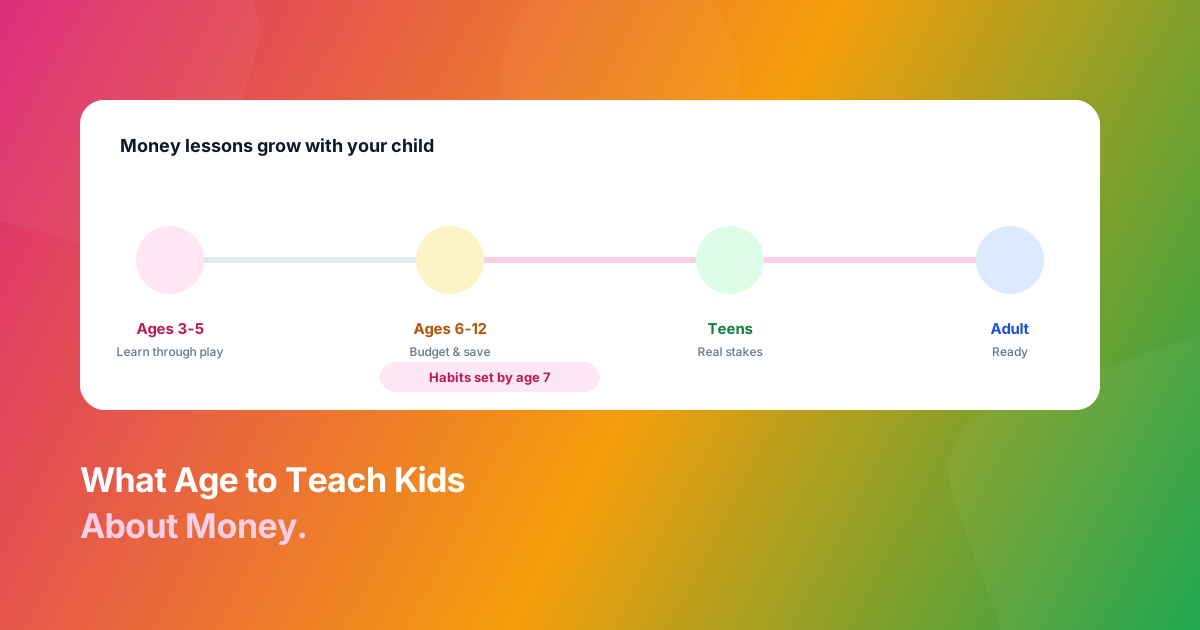
The U.S. Consumer Financial Protection Bureau organizes its respected "Money as You Grow" guidance into three stages, and they make a clean roadmap: ages 3 to 5, ages 6 to 12, and the teen years. Let us walk through each.
Ages 3 to 5: Build the Foundation Through Play
Do not expect a preschooler to grasp abstract money ideas. The CFPB is blunt about this: children ages 3 to 5 are usually too young to understand abstract financial concepts, but, it adds, "they are building a foundation that can serve them well in the future."
So you build that foundation through play. MoneyHelper suggests that at this age children learn through play, and that using coins and playing shop are great ways to teach them how to use money. What to focus on:
- Naming coins and the idea that money buys things.
- Playing shop, swapping pretend money for goods.
- The first taste of waiting: "We will get that next time."
Ages 6 to 12: The Habit-Building Years
This is the golden window. The CFPB describes ages 6 to 12 as when children absorb the day-to-day habits that shape how they earn, save, and shop, working on planning ahead and waiting for what they want, and developing self-control and a positive attitude about saving.
This is where the real teaching tools come in:
- Needs vs wants: the foundation of smart spending. See our guide to needs vs wants for kids.
- A first budget: the save-spend-give jars, covered in how to teach kids to budget.
- An allowance: real money to practice on, structured well.
- Saving toward goals: watching a jar climb toward a toy teaches patience and planning.
- The first idea of growth: the concept that money can earn more money, the seed of investing.
The Teen Years: Hands-On With Real Stakes
By the teen years, kids can take real responsibility for managing money. MoneyHelper notes that the best way for teenagers to learn about money is to handle it themselves, and that when they have their own budget to manage, they quickly learn that money runs out and needs to be spent carefully.
This is the stage for bigger concepts: real budgeting, the difference between saving and investing, how the stock market works, and eventually how credit works. We cover the full teen roadmap in teaching teens about money. The mistakes a teen makes with small money now are far cheaper than the ones an adult makes with big money later.
The Thread That Runs Through Every Age
Notice the pattern. At every stage, the most powerful teaching is not a lecture. It is letting kids do money, at a level that fits their age: play money at 4, jar money at 8, real budget money at 15. Each stage hands them slightly more responsibility and slightly higher stakes, always matched to what they can handle.
That is also why a no-risk practice space is so valuable. Kids can experience real-feeling money decisions, including investing, without real consequences, at whatever age they are ready for the next step.
Meet Kids Where They Are, With No Risk
Piggy Bank for Stocks is built around this age-by-age idea. It delivers bite-sized lessons taught by Penny the Piggy and a no-risk practice portfolio where kids buy simulated shares of real companies at real prices. A younger child explores the basics; an older one practices real investing decisions, all without a cent of real money on the line. It grows with them through the very stages this guide describes. For the underlying case, see why kids should learn investing early.
The Bottom Line
The best age to teach kids about money is earlier than most parents assume. Habits are largely set by seven, so the toddler and preschool years build the foundation through play, the elementary and preteen years are the golden window for budgets, allowances, and saving, and the teen years are for hands-on practice with real stakes. Match the lesson to the age, let kids actually handle money at every stage, and you give them a head start that compounds for life.
Sources
- MoneyHelper. "Learning about money by age" and "How to talk to your children about money" (UK government-backed guidance; money habits largely form by age 7, based on University of Cambridge research by Dr. David Whitebread and Dr. Sue Bingham, 2013, commissioned by the Money Advice Service). moneyhelper.org.uk
- Consumer Financial Protection Bureau. "Money as You Grow" (age-based money milestones for ages 3 to 5, 6 to 12, and teens). consumerfinance.gov
- Consumer Financial Protection Bureau. "Money milestones for young children" (children ages 3 to 5 are usually too young to understand abstract financial concepts but are building a foundation). consumerfinance.gov
Start Money Lessons at the Right Age
Piggy Bank for Stocks meets kids where they are with bite-sized, age-appropriate lessons and a no-risk practice portfolio. Download Piggy Bank for Stocks and Kids Piggy Bank Management free for iPhone and iPad.
Download Knooty Free