Say the word "budget" to most kids and they picture a boring spreadsheet. Honestly, plenty of adults feel the same way. But a budget is not a spreadsheet. It is simply a plan for your money, deciding where it goes before it disappears. And it turns out that knowing how to teach kids to budget is one of the highest-value money skills you can pass on.
The federal MyMoney.gov guidance, run by the U.S. Financial Literacy and Education Commission, puts the core idea simply: a good way to take control of your spending is to set the maximum you plan to spend, and once you have set the maximum, stick with your plan. That is budgeting in one sentence. Here is how to teach it to a child without a single spreadsheet.
Start With Three Jobs for Every Dollar
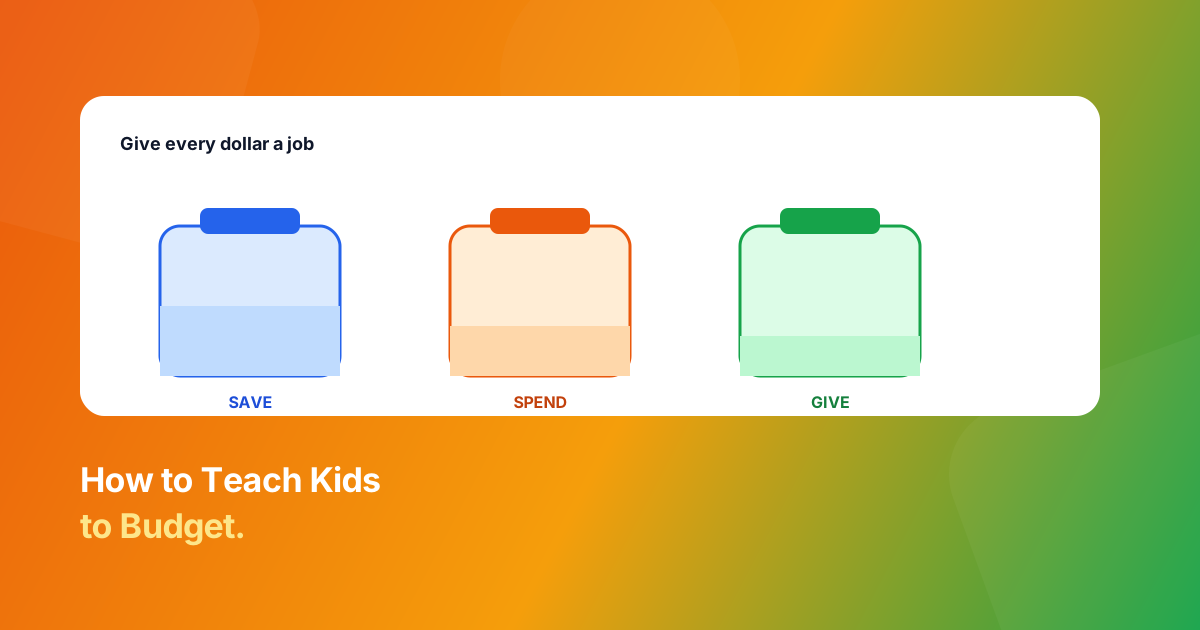
The simplest, most effective way to teach budgeting is the save, spend, give system. Every time your child receives money, they split it into three:
- Save: money set aside for a bigger goal or for later.
- Spend: money they can enjoy now, guilt free.
- Give: money to share with someone or a cause they care about.
Use three clear jars so the money is visible. The magic is that budgeting stops being abstract. A child can literally see their plan filling up. When the spend jar is empty, the lesson teaches itself, no lecture required.
Why This Works, According to the Research
The save-spend-give system is not just folk wisdom. It maps directly onto the skills experts say matter most. The U.S. Consumer Financial Protection Bureau lists, among the money milestones for school-age children, a positive attitude about saving and self-control, and the ability to plan ahead or save up for what she wants. Splitting money into jars builds exactly those muscles: planning ahead, exercising self-control, and matching money to goals.
Kids learn this best by handling money themselves. MoneyHelper, the UK government-backed guidance service, notes that giving children even the smallest amount of money regularly is a great way to help them learn how to manage it. A budget with nothing to budget is just a worksheet. Real money, even a little, is what makes it click.
How to Teach Budgeting at Each Age
The save-spend-give core stays the same, but you can layer on complexity as kids grow.
- Ages 5 to 7: Three jars, simple splits. Even "one coin in each" works. The point is the habit of dividing money before spending.
- Ages 8 to 10: Add goals. Help them set a save target, like a toy that costs a few weeks of allowance, and watch the save jar climb toward it.
- Ages 11 to 13: Introduce planning ahead. Before they get money, have them decide the split and what each part is for. This is real budgeting.
- Teens: Move to a written or app-based budget that covers their actual spending: snacks, outings, subscriptions. Let them feel running out, then plan better next month.
The Bigger Picture: The MyMoney Five
As kids grow, the save-spend-give system naturally expands into the framework the federal government teaches adults. The MyMoney Five covers five money principles: EARN, SAVE & INVEST, PROTECT, SPEND, and BORROW. You can see how the kid version is just the starter set: save and give and spend grow up into the full picture of earning, protecting, and one day borrowing wisely. Teaching the jars early lays the foundation for all five.
Connect It to Allowance and Goals
Budgeting and allowance go hand in hand. An allowance gives a child money to budget, and a budget gives the allowance a purpose beyond candy. If you have not set one up yet, our allowance playbook covers how much to give, how often, and what to tie it to.
The save jar is also where investing eventually enters the story. Once a child has money set aside for "later," they can start asking how to make it grow, which is the bridge to saving vs investing. Budgeting is the on-ramp to every other money skill.
Practice Money Decisions With No Risk
Budgeting is ultimately about making choices: this goal over that one, save now or spend now. Piggy Bank for Stocks gives children a hands-on space to practice exactly those decisions with simulated money. They plan where money goes, weigh options, and see the results over time, all with no real dollars at stake. Penny the Piggy reinforces the planning habit in short, friendly lessons, so the skill they build on screen carries over to their jars at home.
The Bottom Line
A budget is just a plan for your money, and kids can learn it young with three simple jars: save, spend, give. Decide the split before the money is spent, give them real (if small) amounts to manage, and grow the system in complexity as they age. It builds the planning and self-control that experts say lead to financial well-being, and it lays the on-ramp to saving, investing, and every money skill that follows. Skip the spreadsheet. Start with the jars.
Sources
- MyMoney.gov (U.S. Financial Literacy and Education Commission). "Spend" and the MyMoney Five framework (EARN, SAVE & INVEST, PROTECT, SPEND, BORROW). mymoney.gov
- Consumer Financial Protection Bureau. "Money milestones for school-age children and preteens" (planning ahead, saving up, self-control). consumerfinance.gov
- MoneyHelper. "Learning about money by age" (giving children small amounts regularly helps them learn to manage money). moneyhelper.org.uk
Make Budgeting a Habit, Not a Chore
Piggy Bank for Stocks helps children plan, save, and make money decisions in a fun, hands-on way with zero real money at stake. Download Piggy Bank for Stocks and Kids Piggy Bank Management free for iPhone and iPad.
Download Knooty Free