We teach kids to read, write, and solve equations. We sign them up for swimming lessons and soccer practice. We make sure they know how to cross the street safely. But when it comes to one of the most consequential skills they'll ever need (understanding how money works, how it grows, and how to make it work for them) most children get nothing until they're already adults fumbling through their first paycheck.
That's a problem. And the numbers prove it.
The Financial Literacy Crisis Is Real
According to a 2025 NEFE poll, only 25% of American adults report having taken a personal finance course in school. The consequences are staggering: the average American household carries over $105,000 in debt according to Experian's 2025 Consumer Debt Study, more than 1 in 3 adults can't cover an unexpected $400 expense with cash according to the Federal Reserve's 2024 SHED Survey, and only 27% of Americans can correctly answer basic financial literacy questions per the FINRA Foundation's 2024 National Financial Capability Study.
These aren't just statistics. They represent millions of adults who never learned the basics: what compound interest means, why saving early matters, or how the stock market actually works. According to WalletHub's 2025 research, Gen Z has the lowest financial literacy rate of any generation at just 38%, and 74% of US teens lack confidence in their financial education. Many of today's parents want better for their kids but simply don't know where to start.
Why Start Young? The Science of Early Financial Habits
A landmark 2013 study by Dr. David Whitebread and Dr. Sue Bingham at the University of Cambridge, commissioned by the UK's Money Advice Service (now MoneyHelper), found that children's financial habits and attitudes toward money are largely formed by age 7. By the time a child enters second grade, core "habits of mind" including the ability to plan ahead, delay gratification, and regulate emotions around spending are already taking shape.
"Children's money habits are formed by age 7. Core habits of mind, including the ability to plan ahead and delay gratification, are established in the first few years of life."
Dr. David Whitebread & Dr. Sue Bingham, University of Cambridge (2013), commissioned by the Money Advice Service
This doesn't mean handing a seven-year-old a brokerage account. It means that the window for building healthy financial intuition is earlier than most parents realize. And the kids who get that head start develop something powerful: a comfort with financial concepts that stays with them for life.
Think about it this way. A child who starts learning about investing at age 10 has eight full years of practice before they turn 18. By the time their peers are opening their first checking account, they already understand:
- What a stock actually represents: ownership in a real company, not just a ticker on a screen
- How compound growth works, and why starting early is worth more than starting big
- The emotional discipline of investing: not panicking when prices drop, not chasing hype
- How to evaluate risk vs. reward, a skill that extends far beyond finance
- The value of patience: real wealth is built over years, not overnight
The Compound Interest of Knowledge
Everyone talks about compound interest in terms of money. But there's a compound interest of knowledge that's even more powerful.
A 10-year-old who learns that Apple (AAPL) is both a company and a stock starts seeing the world differently. When they use their iPhone, they think about the company behind it. When they hear about a new product launch, they wonder how it will affect the stock price. When they see news about the economy, they have context for understanding it.
This isn't just investing education. It's a framework for critical thinking, pattern recognition, and understanding how the modern economy functions. Every lesson builds on the last, and the earlier those lessons begin, the more time they have to compound.
But Isn't the Stock Market Risky for Kids?
This is the most common objection, and it's based on a misunderstanding. The stock market is risky when real money is on the line and the investor doesn't know what they're doing. That's exactly why simulated trading environments exist.
When kids practice investing with simulated money using real stock prices, they get all of the learning with none of the financial risk. They experience:
- The thrill of a good pick: buying a stock and watching it climb builds confidence
- The sting of a loss: seeing a position drop teaches resilience and emotional control
- The satisfaction of long-term growth: holding a diversified portfolio and watching it grow over weeks and months
- The consequence of impulsive decisions: chasing hype or selling in panic, without any real damage
This is the same approach used by professional trading firms to train new analysts. Simulated environments are one of the most effective learning tools in finance, and there's no reason children shouldn't benefit from them too.
What Makes Knooty Different
Most financial education for kids falls into two categories: apps that are too simple (basically digital piggy banks) or resources that are too abstract (textbooks and worksheets). Knooty bridges that gap.
Real Stocks, Real Prices, Zero Risk
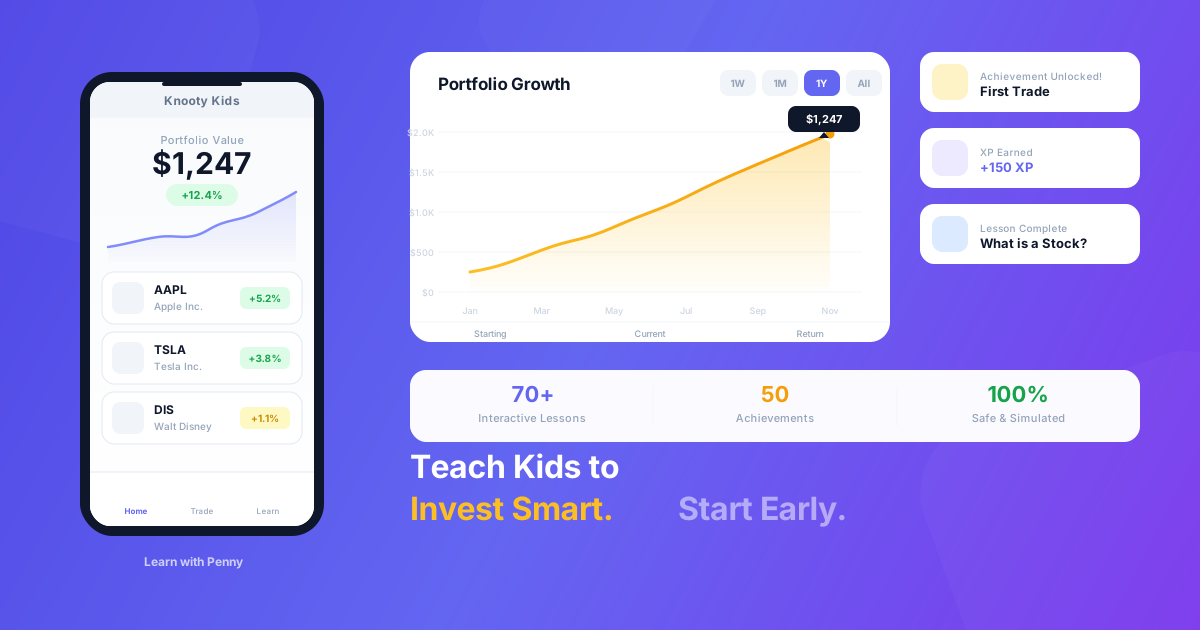
Kids trade actual stocks like Apple, Google, Microsoft, and Tesla with real-time market prices. They see the same price movements that professional investors see. The only difference: the money is simulated. Every trade is a real learning experience without real financial consequences.
Progressive Learning with Penny the Piggy
Our mascot Penny guides kids through 70+ lessons across 10 levels, starting with "What is money?" and building up to concepts like diversification, market cycles, and reading financial statements. Each lesson includes a quiz, and kids earn XP and badges as they progress. These are the same gamification mechanics that make their favorite games addictive, applied to financial education.
Parent Oversight Built In
Parents aren't just watching from the sidelines. With the Kids Piggy Bank Management companion app, parents can see every trade, track learning progress, manage virtual budgets, and see a family leaderboard. It turns investing education into a shared family activity, not a solo screen-time experience.
50 Achievements to Stay Motivated
From making their first trade to building a diversified portfolio, kids unlock achievements that celebrate smart financial decisions. This isn't about rewarding risky behavior. It's about reinforcing the habits that make great investors: patience, research, diversification, and consistency.
The Conversation Starter You Didn't Know You Needed
One of the most underrated benefits of teaching kids investing is what it does for family conversations. When your child comes to dinner excited about their Tesla stock going up 3%, or frustrated that their portfolio dipped, you have a natural opening for meaningful conversations about money, risk, patience, and goals.
These aren't forced or awkward "sit down, let me teach you about finances" moments. They're organic, genuine discussions sparked by something the child is genuinely engaged with. And research consistently shows that children who discuss money with their parents regularly develop stronger financial literacy as adults.
The Age-by-Age Approach
Ages 6-8: Building the Foundation
At this age, kids are ready to understand that companies make things they use every day, and that people can own a tiny piece of those companies. Start with familiar brands: the company that makes their favorite cereal, the studio behind their favorite movie. Knooty's Level 1 lessons are designed for exactly this stage.
Ages 9-11: Making Connections
Kids in this range can start understanding that stock prices change based on how a company is doing. They can make their first simulated trades and begin tracking a simple portfolio. The game-like elements (XP, badges, and leaderboards) keep them coming back.
Ages 12-14: Developing Strategy
Pre-teens are ready for concepts like diversification, risk management, and comparing their portfolio to market benchmarks. They start thinking more strategically and can articulate why they're making certain investment decisions.
Ages 15-16: Real-World Readiness
By the time they're in high school, kids who've been practicing with Knooty understand concepts that most adults struggle with. They're ready to open a real custodial account with genuine confidence, not because they read about investing, but because they've done it for years.
The Bottom Line
We live in a world where financial decisions affect every aspect of life, from education to career choices to retirement. The adults who navigate this landscape confidently are almost always the ones who started learning early. Research from ExcelinEd's 2025 landscape analysis confirms that adults who took a high school personal finance class are 5x more likely to say they graduated prepared to handle money, and that financial education leads to fewer defaults and higher credit scores among young adults.
Your child doesn't need to become a Wall Street trader. But understanding how money grows, how markets work, and how to make informed financial decisions? That's not a luxury. It's a necessity. And the earlier they start, the more time they have to build the knowledge, habits, and confidence that will serve them for a lifetime.
Teaching your kids about investing isn't just about money. It's about teaching them to think critically, plan ahead, manage risk, and understand the world they're growing up in. Those are skills that compound, and the returns are extraordinary.
Sources
- National Endowment for Financial Education (NEFE). "Poll: Majority of U.S. Adults Want Financial Education in High Schools." April 2025. nefe.org
- Board of Governors of the Federal Reserve System. "Report on the Economic Well-Being of U.S. Households in 2024: Savings and Investments." May 2025. federalreserve.gov
- Experian. "Consumer Debt Study 2025." experian.com
- Federal Reserve Bank of New York. "Household Debt and Credit Report." newyorkfed.org
- FINRA Investor Education Foundation. "National Financial Capability Study, Sixth Edition." July 2025. finrafoundation.org
- Whitebread, D. & Bingham, S. "Habit Formation and Learning in Young Children." University of Cambridge, commissioned by the Money Advice Service (now MoneyHelper). 2013. moneyhelper.org.uk
- WalletHub. "Financial Literacy Statistics 2025." wallethub.com
- Next Gen Personal Finance (NGPF). "2025 State of Financial Education Report." ngpf.org
- ExcelinEd. "Financial Literacy Education in the United States: Landscape Analysis and Next Steps." March 2025. excelined.org
Start Your Child's Investing Journey Today
Piggy Bank for Stocks makes learning real investing safe, fun, and effective. Download free for iPhone and iPad.
Download Knooty Free