"Save your money." Kids hear it constantly. But almost no one tells them the other half of the story: that money can also be put to work and grow. Understanding saving vs investing for kids is one of the most useful money lessons you can teach, and it is far simpler than it sounds.
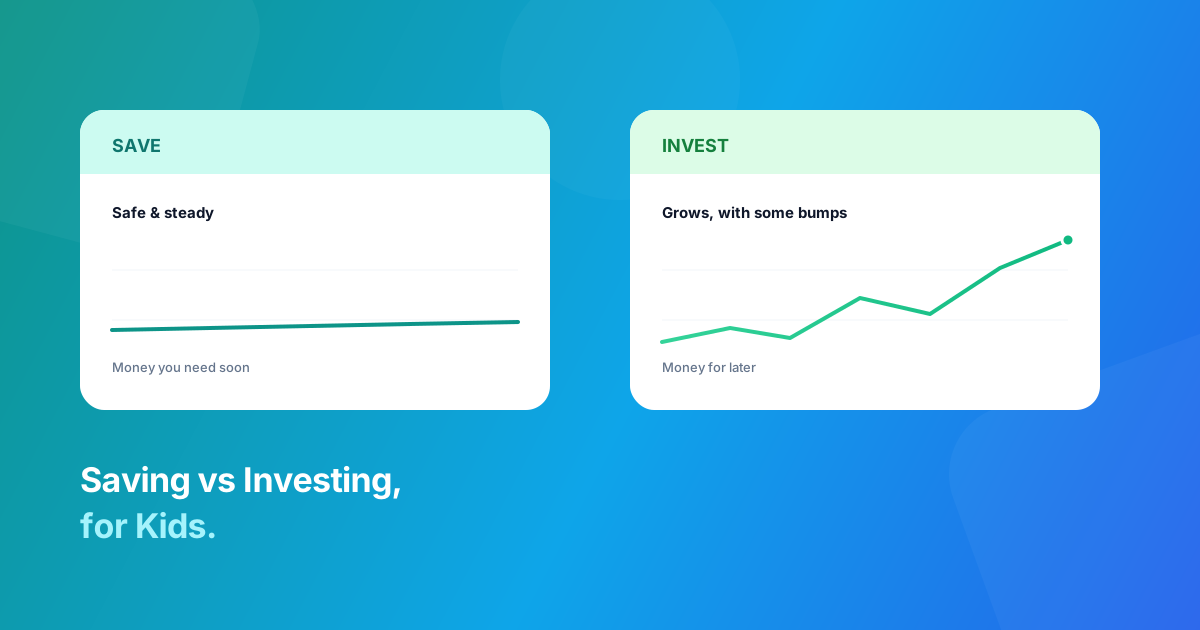
The short version is this. Saving keeps money safe and ready. Investing gives money a chance to grow, with some risk attached. Both are good. They just do different jobs. Once a child understands which tool fits which goal, they have a mental model that will serve them for the rest of their life.
What Saving Really Means
Saving is setting money aside in a safe spot where it stays put and is easy to reach. A piggy bank counts. So does a savings account at a bank. The defining feature is safety: the dollars you put in are the dollars you get back, and you can grab them whenever you need them.
For a kid, saving is the right tool for any goal that is coming up soon. Saving up for a new game in three weeks? That money should sit safely in savings, not somewhere it might shrink right before the purchase. Saving is also where an emergency cushion lives, the just-in-case money that needs to be there no matter what.
What Investing Really Means
Investing is putting money into something, like a share of a company, that can grow in value over time. The catch is that it can also shrink. The U.S. Securities and Exchange Commission states it plainly on its investor education site: "When investing, you have a greater chance of losing your money than when you save." The SEC also notes that unlike insured bank deposits, invested money is not federally insured, and "you could lose your 'principal,' which is the amount you've invested."
So why would anyone do it? Because, as the same SEC page puts it, "when you invest, you also have the opportunity to earn more money." Over long stretches of time, investments have historically grown far more than savings. A broad basket of large U.S. companies, the S&P 500, has returned about 10% a year on average since 1957, though any single year can be much higher or lower.
That is the trade. Investing accepts some ups and downs in exchange for a shot at more growth. The way to win is time, which kids have more of than anyone.
The Key Difference, in One Sentence
Here is the line to give your child: Saving keeps your money safe for soon. Investing helps your money grow for later.
That single sentence captures the whole idea. Safe versus growing. Soon versus later. Almost every grown-up money decision is some version of choosing between those two.
How to Decide Which to Use
The deciding question is almost always time. When will you need the money?
- Need it soon (days, weeks, a few months): save it. You cannot afford for it to dip right before you need it.
- Will not need it for years: investing makes sense, because time gives it room to recover from dips and grow.
- Just in case money: always saved. An emergency cushion must be safe and reachable.
This is also a natural extension of how an allowance can be split. If your child already divides money into save, spend, and give, investing simply gives the "save for later" portion somewhere to grow. We break down that structure in the allowance playbook.
Teaching Risk Without Scaring Them
Kids do not need a finance lecture on risk. They need a feel for it. Try a simple game: offer a guaranteed small reward now, or a coin flip for a bigger reward. Over a few rounds, they discover that the riskier choice sometimes wins big and sometimes loses, while the safe choice is always small but certain. That is risk and reward in miniature.
The goal is not to teach them that risk is bad. It is to teach them that risk is a choice you make on purpose, matched to your goal and your time frame. A patient long-term investor takes more risk happily because time is on their side. Someone saving for next week takes none.
Where Knooty Comes In
The hardest part of teaching investing is that real risk means real money, and no parent wants their 10-year-old learning that lesson with the family's cash. That is exactly the gap Piggy Bank for Stocks fills.
In Piggy Bank for Stocks, children can set savings goals and also invest in real companies at real market prices, all with simulated money. They watch a virtual portfolio rise and fall, feel the difference between safe and growing money firsthand, and learn the single most valuable investing skill there is: staying calm and patient when prices dip. Penny the Piggy guides them through the why in short, friendly lessons. For the bigger case on starting young, see why kids should learn investing early.
The Bottom Line
Saving and investing are not rivals. They are two tools for two jobs. Saving keeps money safe and ready for soon. Investing gives money a chance to grow for later, in exchange for some ups and downs along the way. Teach your child to ask one question first, "when will I need this money?", and they will already think about money more wisely than many adults. Then let them practice both with no risk, and the lesson becomes a habit.
Sources
- U.S. Securities and Exchange Commission. "Understand What It Means to Invest." Investor.gov. investor.gov
- U.S. Securities and Exchange Commission. "Small Savings Add Up to Big Money." Investor.gov. investor.gov
- Fidelity. "What is the S&P 500 and stock market average return?" (average annual return of about 10% since the index's 1957 launch). fidelity.com
Let Them Practice Both, Risk Free
Piggy Bank for Stocks gives children a safe place to save toward goals and invest in real companies at real prices, with zero real money on the line. Download Piggy Bank for Stocks and Kids Piggy Bank Management free for iPhone and iPad.
Download Knooty Free