At some point, many parents who care about their kids' financial future ask the same question: "Can I actually invest money for my child now, while they are still little?" The answer is yes, and the most common tool for doing it is a custodial account for kids. If the term sounds intimidating, do not worry. The idea is simpler than the paperwork makes it look.
This guide walks through what a custodial account is, how UGMA and UTMA accounts differ, who actually controls the money, and the one detail that surprises most parents: when your child takes over. Everything here is grounded in guidance from FINRA, the U.S. broker regulator. A quick note first: this is general education, not financial or tax advice, so check with a professional for your specific situation.
What a Custodial Account Actually Is
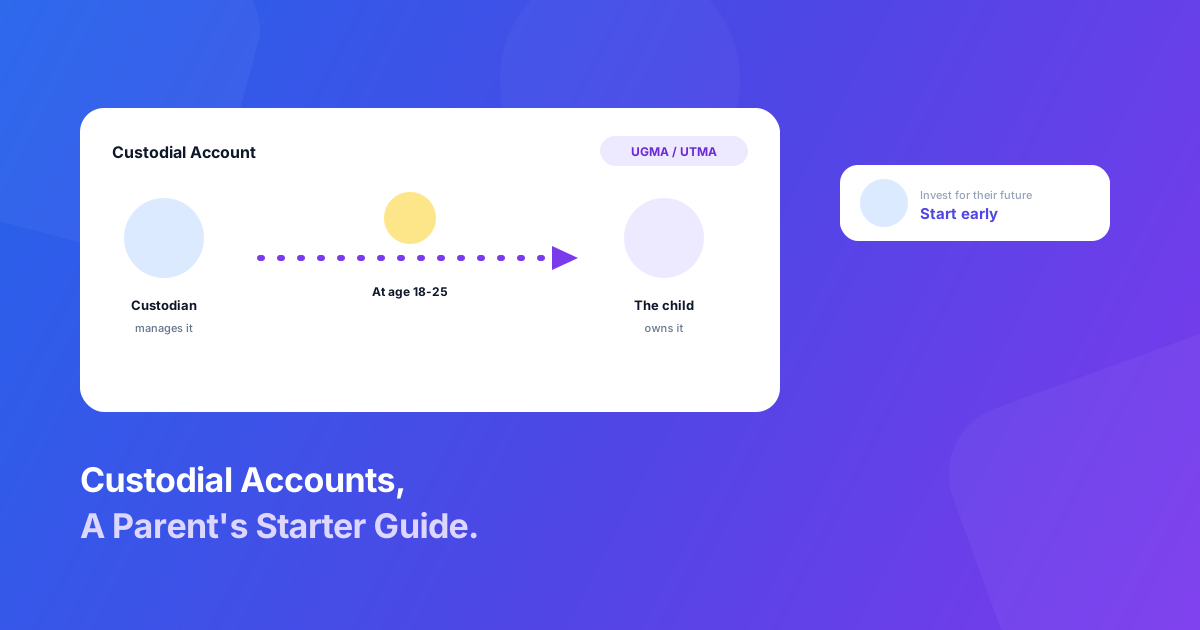
A custodial account is an investment account that an adult opens and manages on behalf of a minor. The adult, called the custodian, makes the investment decisions, but the assets legally belong to the child. According to FINRA, a parent, grandparent, or other adult is custodian for the account and makes all the investment decisions until the child reaches the age of majority.
In plain terms: you drive the car, but the car belongs to your kid. You choose the investments while they are young, and one day they get the keys.
UGMA vs UTMA: The Two Common Types
You will see two acronyms everywhere: UGMA and UTMA. Both are model laws, adopted in some form by every U.S. state, that let you transfer assets to a minor without setting up a formal trust. The practical difference comes down to what you can put in.
- UGMA (Uniform Gifts to Minors Act): FINRA notes UGMA accounts are limited to gifts of cash, securities such as stocks, bonds or mutual funds, and insurance policies.
- UTMA (Uniform Transfers to Minors Act): UTMA accounts are broader, allowing the contribution of virtually any kind of asset, including real estate.
For most families simply investing cash and stocks for a child, either works. Which one is available often depends on your state and your brokerage.
The Detail That Surprises Parents: The Age of Majority
Here is the part worth reading twice. A custodial account is not yours forever. When the child reaches the age of majority, which ranges from 18 to 25 depending on the state, the custodian is required to transfer the account to the child. At that point it is fully theirs, to use however they want.
That means an 18-year-old in some states can take a custodial account built up over many years and spend it on anything. For most families this is fine, especially if you have spent those years teaching the values and skills to handle it. But it is exactly why financial education along the way matters so much. The account hands them the money. Your teaching decides whether they are ready for it.
A Few Things to Weigh Before Opening One
Custodial accounts are powerful, but they come with trade-offs worth understanding.
- Financial aid: FINRA notes that because the account is considered the child's asset, it may have a bigger negative impact on future financial aid than some other account types.
- No switching beneficiaries: You cannot move the money to a sibling later. If the child does not need it, it stays theirs.
- Taxes: Contributions are not tax deductible, and there can be tax considerations on the account's earnings. A tax professional can walk you through your situation.
None of these are reasons to avoid a custodial account. They are simply reasons to go in informed.
The Step Most Parents Skip
It is tempting to open the account, fund it, and feel like the job is done. But the account is only the container. The real gift is the child knowing what to do with it. A teenager who suddenly gains control of an investment account they never understood is far more likely to mishandle it than one who has been learning how investing works for years.
That is why teaching comes first. Long before any real dollars are at stake, kids can learn how the stock market works, why diversification matters, and how patience pays off. By the time the account becomes theirs, the skills are already in place.
Build the Skills First, With No Risk
This is exactly where Piggy Bank for Stocks fits. It is not a brokerage and it does not hold real money. It is a place for kids to learn how investing actually works by buying simulated shares of real companies at real market prices and watching a virtual portfolio over time. They make decisions, feel the ups and downs, and build the patient mindset that real investing rewards, all with zero risk. Penny the Piggy guides them through the concepts in short, friendly lessons.
Pair that learning with a custodial account when you are ready, and your child grows up with both the money and the know-how to handle it. For the broader case, see why kids should learn investing early.
The Bottom Line
A custodial account is the most common way for a parent to invest on a child's behalf. You manage it as custodian, the money belongs to the child from the start, and control transfers to them at the age of majority, somewhere between 18 and 25 depending on your state. UGMA and UTMA are the two common types, differing mainly in what assets they hold. The account is a great tool, but it works best paired with years of financial education, so that when your child gets the keys, they actually know how to drive.
Sources
- FINRA. "College Savings Accounts" (ESAs and custodial accounts: how UGMA and UTMA accounts work, custodian role, and age of majority). finra.org
- FINRA. "Uniform Transfers to Minors Act (UTMA) and Uniform Gifts to Minors Act (UGMA) Accounts." finra.org
- Fidelity. "What is the S&P 500 and stock market average return?" (average annual return of about 10% since 1957). fidelity.com
Build the Skills Before the Account
Before real dollars go into a custodial account, let your child learn how investing works with Piggy Bank for Stocks: real companies, real prices, zero risk. Download Piggy Bank for Stocks and Kids Piggy Bank Management free for iPhone and iPad.
Download Knooty Free