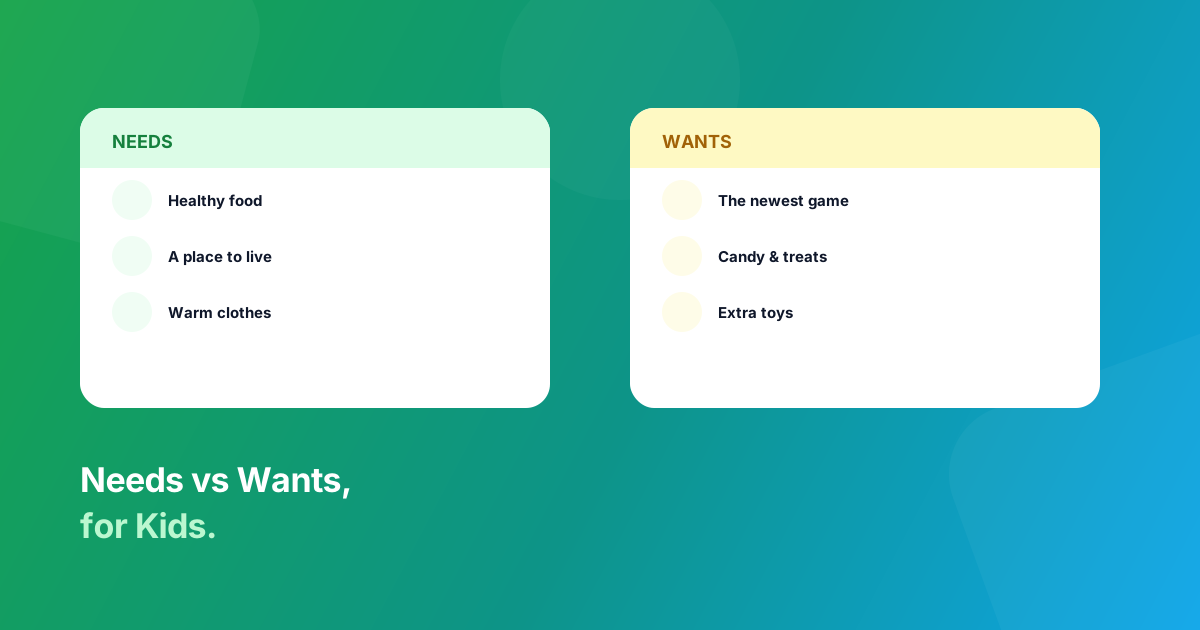
Every smart money decision a person ever makes starts with one quiet question: do I actually need this, or do I just want it? That is why needs vs wants for kids is not a small lesson. It is the foundation everything else is built on. Master it early and budgeting, saving, and spending wisely all become much easier later.
The good news is that this is one of the most teachable money concepts there is, because it lives in everyday life. You do not need a worksheet. You need a grocery store, a toy aisle, and a few good questions. Here is how to teach the difference at every age.
The Simple Definition Kids Can Hold Onto
Keep it concrete. A need is something you must have to live, stay healthy, and be safe: food, water, a place to live, and clothes to keep warm. A want is something that is nice to have but you could live without: toys, candy, the newest game, a fancier version of something you already own.
The tricky part, even for adults, is that wants love to disguise themselves as needs. "I need those shoes." Do you need shoes, or do you want those particular shoes? Teaching kids to spot that disguise is the real skill.
What the Research Says About When to Start
Kids are ready earlier than many parents expect. According to MoneyHelper, the UK government-backed money guidance service, children around ages five and six are starting to learn the difference between needs and wants, even if they do not fully grasp it yet. That makes the early school years the perfect time to plant the idea.
The concept then deepens through the elementary and preteen years. The U.S. Consumer Financial Protection Bureau notes that between the ages of 6 and 12, children absorb the day-to-day habits that shape how they earn, save, and shop, including the ability to make money choices that align with their own goals and values. Needs versus wants is the entry point to all of it.
How to Teach It at Each Age
The lesson never changes, but the delivery should.
- Ages 4 to 6: Keep it to two clear piles. At the store, narrate your own choices out loud: "We need milk, so it goes in the cart. That candy is a want, so not today." Repetition is the lesson.
- Ages 7 to 9: Let them feel the trade-off. Give a small spending amount and let them choose. When the want is gone and the money is spent, the lesson lands without a lecture.
- Ages 10 to 12: Introduce planning. Before a shopping trip, have them list needs versus wants and rank the wants. Now they are prioritizing, a real budgeting skill.
- Teens: Connect it to bigger goals. A want skipped today can become savings toward something they care about more. This is where needs versus wants meets long-term thinking.
The Magic Pause
The single most useful habit you can build is the pause. Before any purchase, your child asks themselves: "Is this a need or a want? And if it is a want, is it worth my money more than something else I want?"
That pause is self-control in action, one of the foundational money skills the CFPB highlights for young children. It does not mean wants are bad. Wants are part of a happy life. It means choosing them on purpose instead of on impulse. A child who pauses is already ahead of plenty of adults who do not.
Avoid the Common Trap
One mistake parents make is treating every want as something to talk a child out of. That backfires. Kids who are never allowed wants either rebel later or feel guilty about normal desires. The healthier message is balance: needs come first, then wants get a planned, guilt-free place in the budget.
This is also why an allowance is such a powerful teaching tool. When kids spend their own money on wants, the trade-off becomes real in a way it never is with yours. For how to structure that, see the allowance playbook, and for the broader set of money talks worth having, our guide to 5 money conversations to have with your kids.
Practice It With No Real Money
Needs versus wants is also the doorway into spending and investing decisions. In Piggy Bank for Stocks, children make choices about where simulated money goes, weighing one option against another, all with no real dollars at stake. They build the pause-and-decide habit in a safe space, and Penny the Piggy reinforces the why in short, friendly lessons. The skill they practice on screen is the same one they will use in the store.
The Bottom Line
Needs versus wants is the first money skill and the one everything else rests on. Teach it with sorting games, real trade-offs, and the magic pause, not with lectures. Start around age five or six when kids are first ready, deepen it through the preteen years, and connect it to goals as they grow. A child who can calmly tell a need from a want, and choose their wants on purpose, has the single best foundation for a lifetime of smart money decisions.
Sources
- Consumer Financial Protection Bureau. "Money milestones for school-age children and preteens." Money as You Grow. consumerfinance.gov
- Consumer Financial Protection Bureau. "Money as You Grow" (age-based money milestones). consumerfinance.gov
- MoneyHelper. "Learning about money by age" and "How to talk to your children about money." (UK government-backed guidance; needs and wants begin around ages 5 to 6). moneyhelper.org.uk
Turn Spending Choices Into a Game
Piggy Bank for Stocks helps children practice smart spending and saving with real companies and zero real money at stake. Download Piggy Bank for Stocks and Kids Piggy Bank Management free for iPhone and iPad.
Download Knooty Free