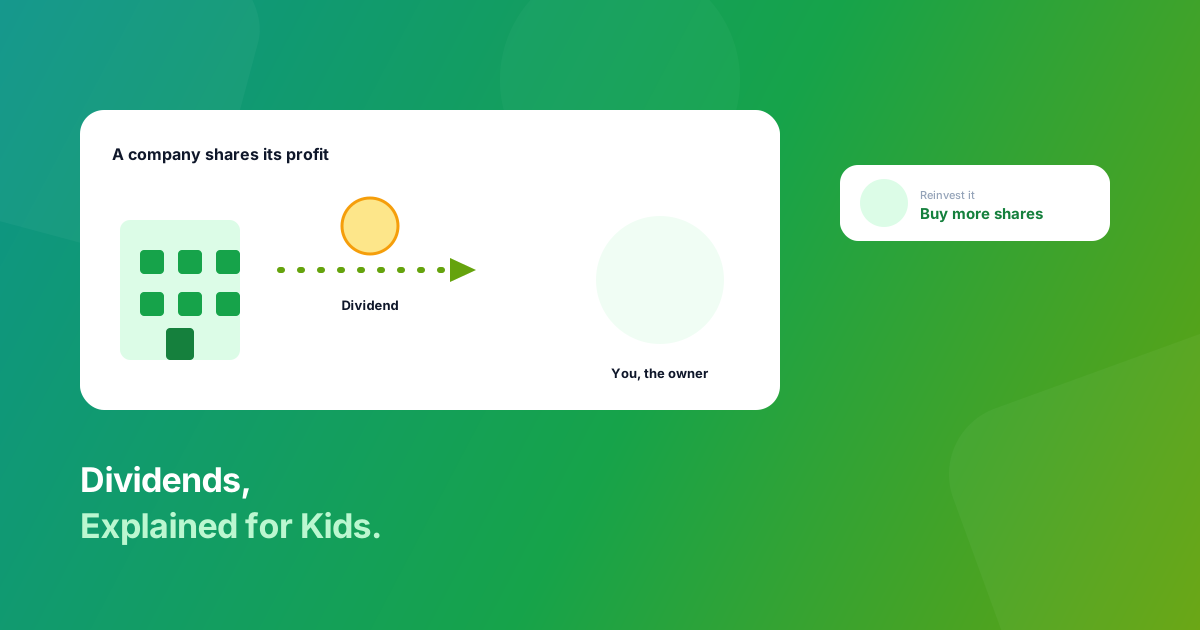
Imagine owning a tiny piece of a lemonade stand, and every time the stand has a good week, it hands you a few coins just for being an owner, without you doing any of the work. To a kid, that sounds almost too good to be true. But that is exactly what a dividend is, and it is one of the most delightful ideas in all of investing. Dividends explained for kids is a lesson that tends to make young eyes light up.
The U.S. Securities and Exchange Commission keeps the definition refreshingly simple on its investor education site: a dividend is "a portion of a company's profit paid to shareholders." Here is how to unpack that for a child, and why the real magic shows up when you reinvest.
First, a Quick Refresher: What You Own
Dividends only make sense once a kid knows what a share is. The SEC defines a share of stock as something that "signifies an ownership position (called equity) in a corporation, and a claim on its proportional share in the corporation's assets and profits." In kid language: own a share, own a slice of the company, including a claim on its profits. If your child needs the full picture first, our guide to the stock market explained for kids sets it up perfectly.
Here is the key phrase: a claim on its profits. That is the doorway to dividends.
So What Is a Dividend?
When a company earns more money than it needs to keep growing, it has a choice. It can keep all of that profit to build new things, or it can share some of it with the people who own pieces of it, its shareholders. That shared-out slice of profit is a dividend.
Picture it as a thank-you payment. "Thanks for owning a piece of us. We had a good year, so here is a little of the profit, just for being an owner." The SEC notes that companies which pay dividends usually do so on a fixed schedule, often every few months, although they can issue them at other times too.
Not Every Company Pays One
An important nuance for older kids: not all companies pay dividends, and that is not a bad thing. Many fast-growing companies keep all their profit and pour it back into growing bigger, hoping that makes each share worth much more later. Older, steadier companies are more likely to share profits as dividends.
So there are two ways an investment can reward you: the share itself can grow in value, or the company can pay you dividends along the way. Some do one, some do the other, some do both. Understanding that gives kids a fuller picture of how owning a piece of a company actually pays off.
The Real Magic: Reinvesting
Here is the part that turns a nice idea into a powerful one. When your child gets a dividend, they can spend it, or they can use it to buy more shares. Buying more shares means more pieces of the company, which means bigger dividends next time, which buys even more shares.
Sound familiar? It is the snowball effect, the same compound growth that makes starting young so powerful. The SEC's own savings examples show how money that keeps earning on its earnings grows faster and faster over time. Reinvested dividends are one of the cleanest, most visible examples of that snowball at work. We go deep on the snowball in our guide to compound interest for kids.
Why Kids Find This So Motivating
There is something genuinely exciting to a child about money that shows up without extra work. It makes the abstract idea of "owning" a company feel concrete and rewarding. A kid who sees even a small simulated dividend land in their account suddenly understands, in their gut, why people want to own pieces of good companies.
That feeling is the hook. It turns investing from a boring grown-up topic into something they actively want to learn more about. And it quietly teaches patience, because the kids who reinvest and wait see their snowball grow the most.
Watch It Happen, With No Real Money
In Piggy Bank for Stocks, children own simulated shares of real companies and learn how investing works in a hands-on way, with no real money at stake. They explore which companies do what, watch their portfolio change over time, and build the patient, long-term mindset that real investing rewards. Penny the Piggy explains the why behind concepts like dividends and reinvesting in short, friendly lessons, so the ideas stick.
The Bottom Line
A dividend is a company's way of sharing its profit with the people who own it, a thank-you payment just for being an owner. Not every company pays one, and that is fine, because shares can reward you by growing too. But the real lesson for a kid is reinvesting: dividends that buy more shares, that earn bigger dividends, that buy more shares again. That is the snowball, and a child who understands it has grasped one of the most powerful ideas in investing.
Sources
- U.S. Securities and Exchange Commission. "Dividend" (glossary definition). Investor.gov. investor.gov
- U.S. Securities and Exchange Commission. "Stock" (glossary definition: a share signifies an ownership position in a corporation). Investor.gov. investor.gov
- U.S. Securities and Exchange Commission. "Small Savings Add Up to Big Money" (compound growth example). Investor.gov. investor.gov
Let Them Own Companies That Share Profits
Piggy Bank for Stocks lets children own simulated shares of real companies and learn how investing works, with zero real money at stake. Download Piggy Bank for Stocks and Kids Piggy Bank Management free for iPhone and iPad.
Download Knooty Free